



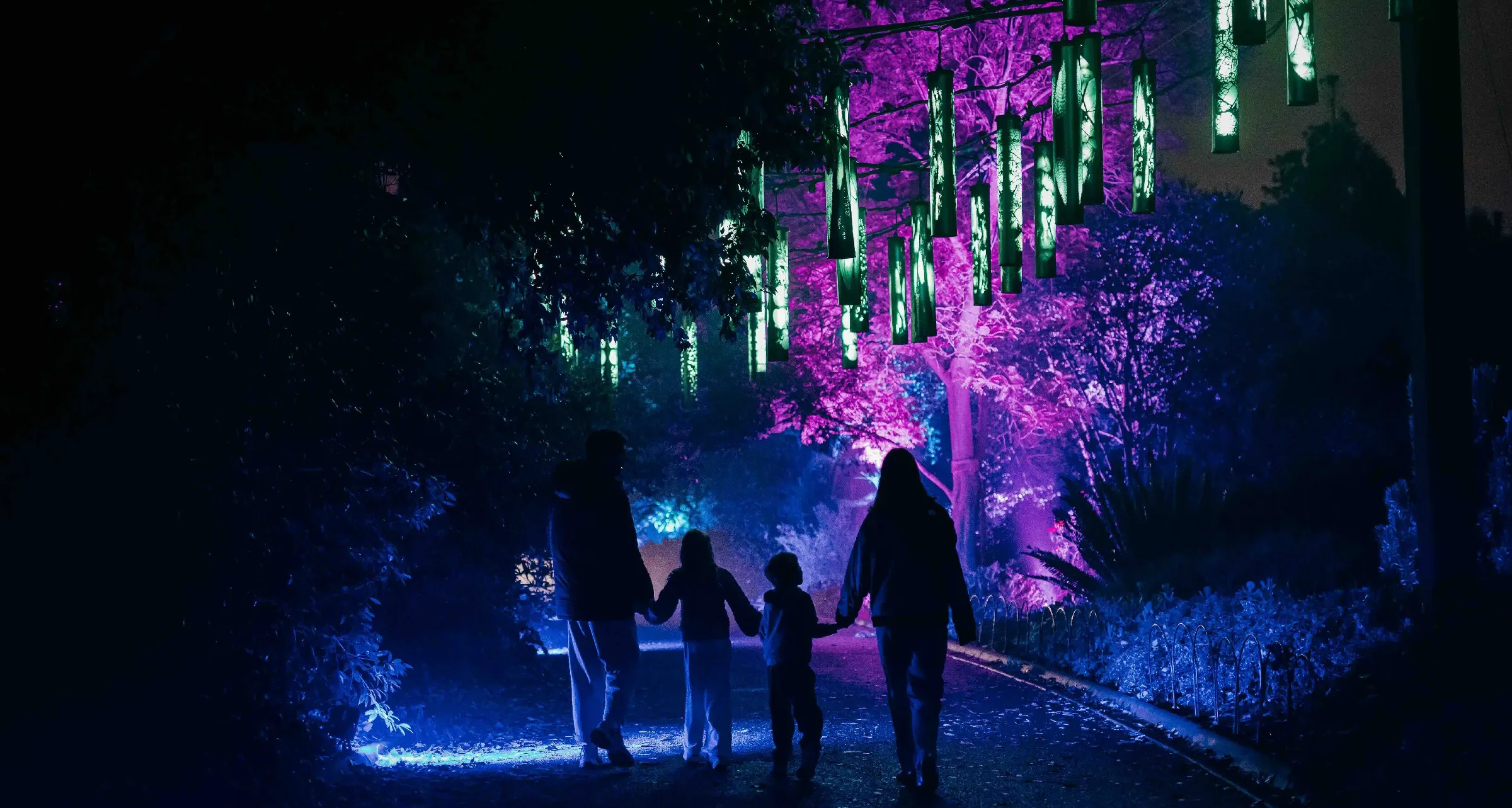
WILDERNESS WITHIN
Lightscape Melbourne
Forty lanterns, one living, breathing entity
Melbourne media artist Dr Betty Sargeant has spent ten years photographing the natural world through a microscope, in ecosystems from the Amazon to the Sahara. For Lightscape 2026 Melbourne she printed it onto recycled acrylic, hung forty lanterns along a night trail in the Royal Botanic Gardens, and programmed them to move as one, set to a soundscape of her own. ENTTEC supplied the lighting and the control behind it: 80 metres of custom RGBW Neon Flex on a single STORM 10, with a show Betty mapped herself in ELM and saved onto an S-PLAY Lite, which plays it back on its own every evening.
| Client | Dr Betty Sargeant |
|---|---|
| Type | Arts and Culture |
| Location | Royal Botanic Gardens Melbourne, Australia |
| 产品 | RGBW S9 Neon Flex, STORM 10, ELM (ENTTEC LED Mapper), S-PLAY Lite |
| Year | 2026 |
| Project credits | Artist: Dr Betty Sargeant Producers: Culture Creative Event host: Lightscape Melbourne Partner: Royal Botanic Gardens Melbourne Acrylic printing: Billboard Media Lighting supply and control support: ENTTEC |
What is Lightscape?
Every winter since 2020, Culture Creative have produced Lightscape in botanic gardens and landscapes across Australia and the United States: a trail you walk after dark. No two are the same: each garden gets a trail of its own, with local and international artists, lighting designers and musicians commissioned for it.
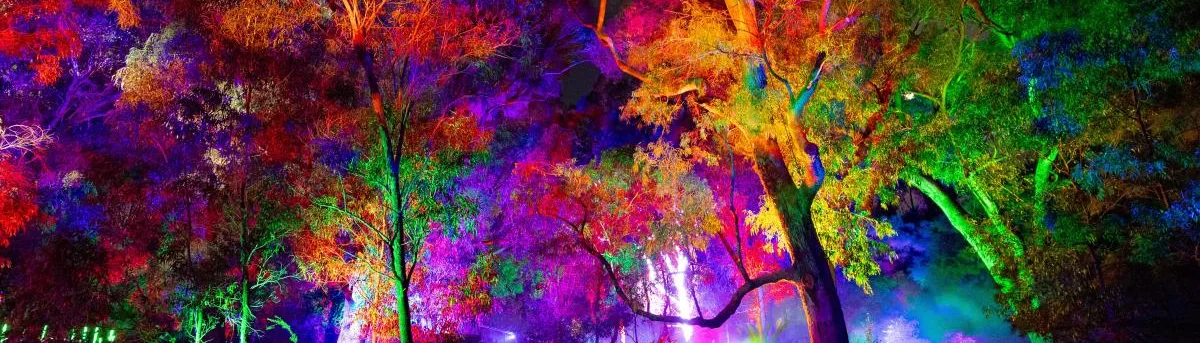
The WILDERNESS WITHIN installation
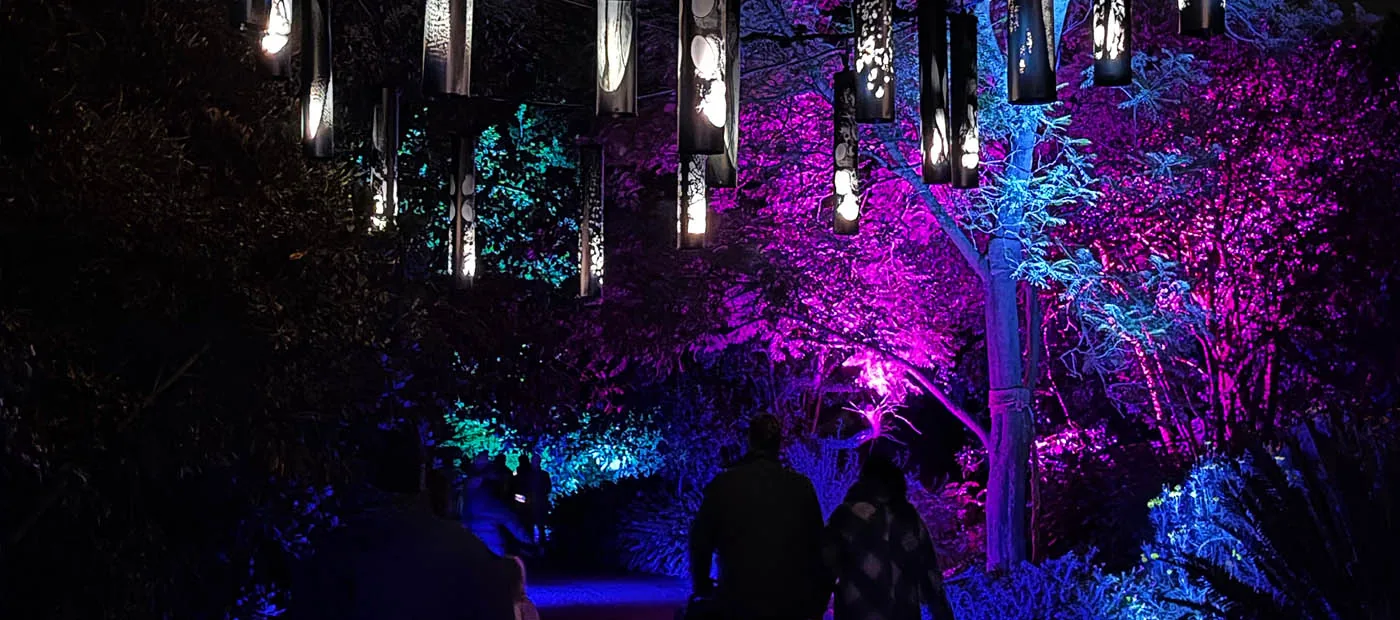
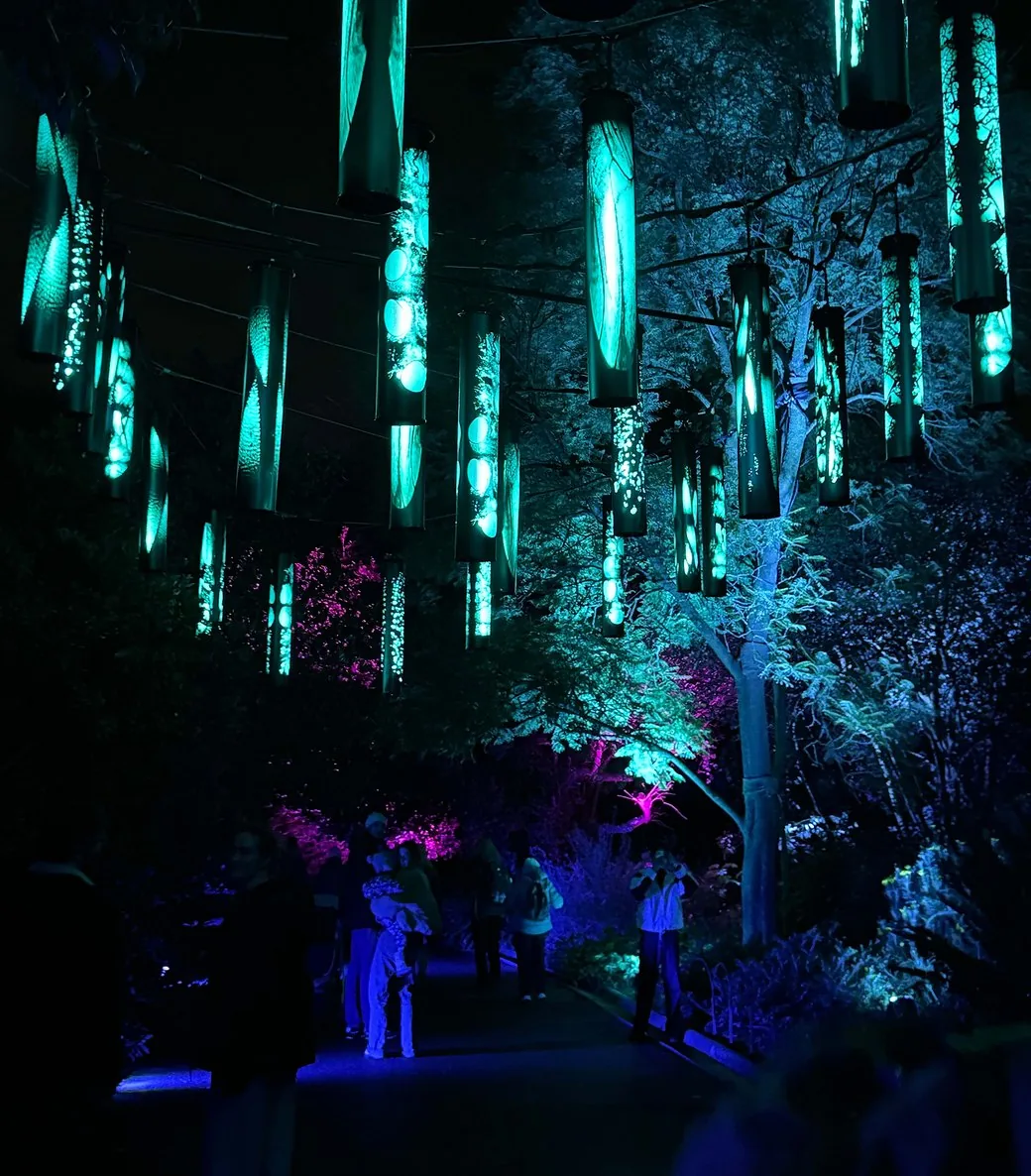
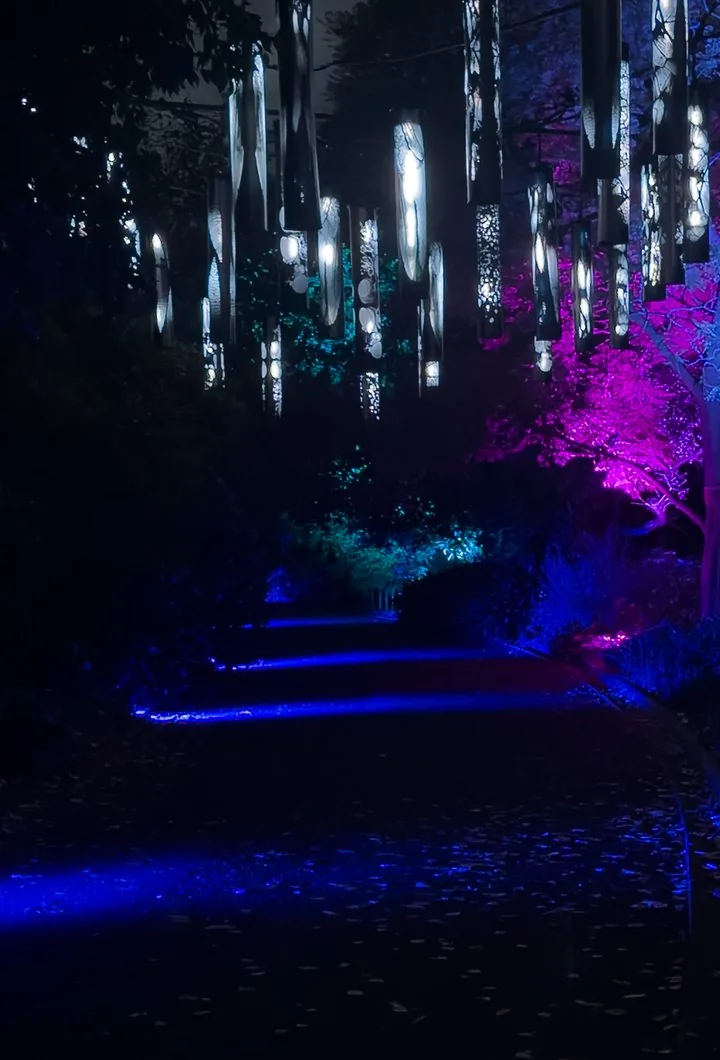
Along this stretch of the trail, the lanterns hang above the garden path, so visitors walk beneath Betty’s enlarged microscope imagery. The whole field moves together in one slow, breathing rhythm, and over the two-minute loop the colour shifts through gold, a deep red, magenta, blue, cyan, a cold white and green. Each colour changes how the imagery reads. Cool tones show the printed structure of the lanterns, so the biology looks like a scientific specimen. Warm tones make the same forms glow like a nocturnal organism.
The sound comes from the same places as the imagery. Betty’s soundscape fuses her own electronic dance music with field recordings from those ecosystems, including the internal sound of trees and hydrophone recordings from significant waterways: sounds usually just as hidden as the microscopic world on the lanterns. Her goal is “to make people feel as if they are in the centre of something alive and unique”.
Light swells out from the middle like a breath: Betty’s way of giving the ecosystems in her imagery one shared pulse.
Cold white, which shows the printed structure of each lantern.
Two minutes on the trail, with Betty’s soundtrack. Unmute to hear it.
Solution
Powered by STORM 10, ELM (ENTTEC LED Mapper) and S-PLAY Lite
Lit up by 80 x 1m of custom RGBW S9 Neon Flex, 5,600 LEDs
The light, and how it hangs
The artwork runs on 80 one-metre lengths of custom RGBW S9 Neon Flex, two inside each lantern. It is a weatherproof silicone strip of dot-free LEDs, so through the printed acrylic you see a continuous line of light rather than a row of dots. Betty chose the S9 for its wide 120 degree beam, and the cool white 5000K variety for maximum effect outdoors. At 70 LEDs per metre, that is 5,600 LEDs.
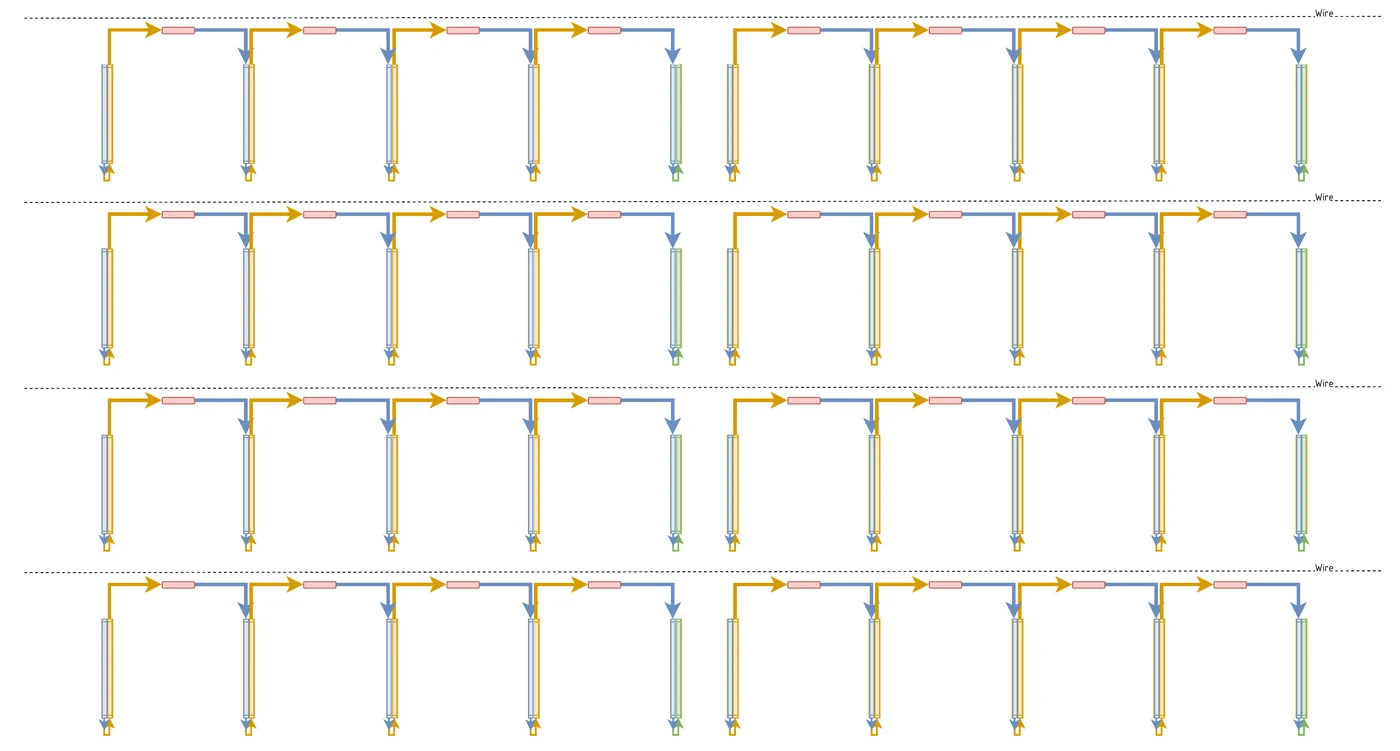
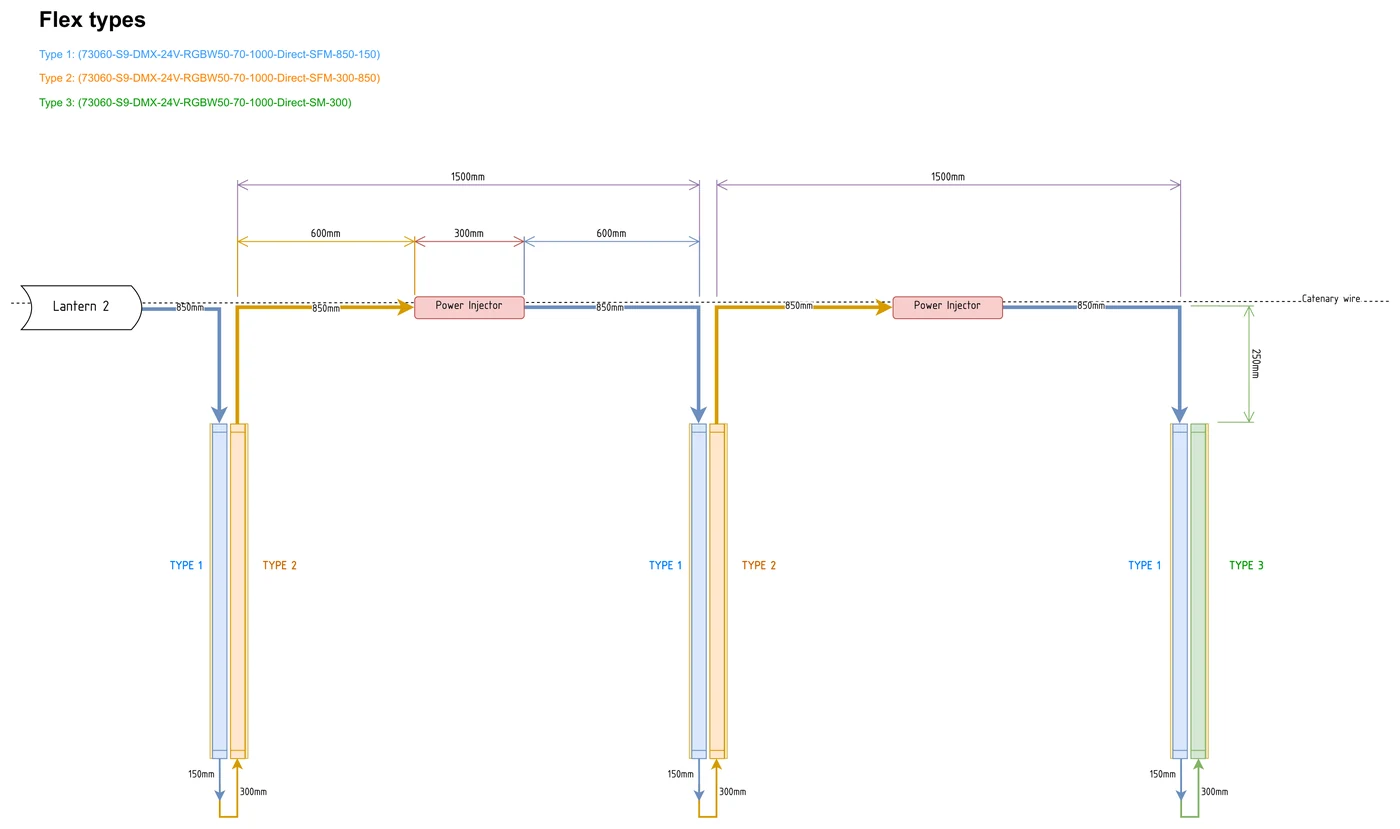
The lanterns do not hang one by one. Four wires run across the garden, ten lanterns to a wire, a metre and a half apart, and each wire carries two clusters of five (diagram 1).
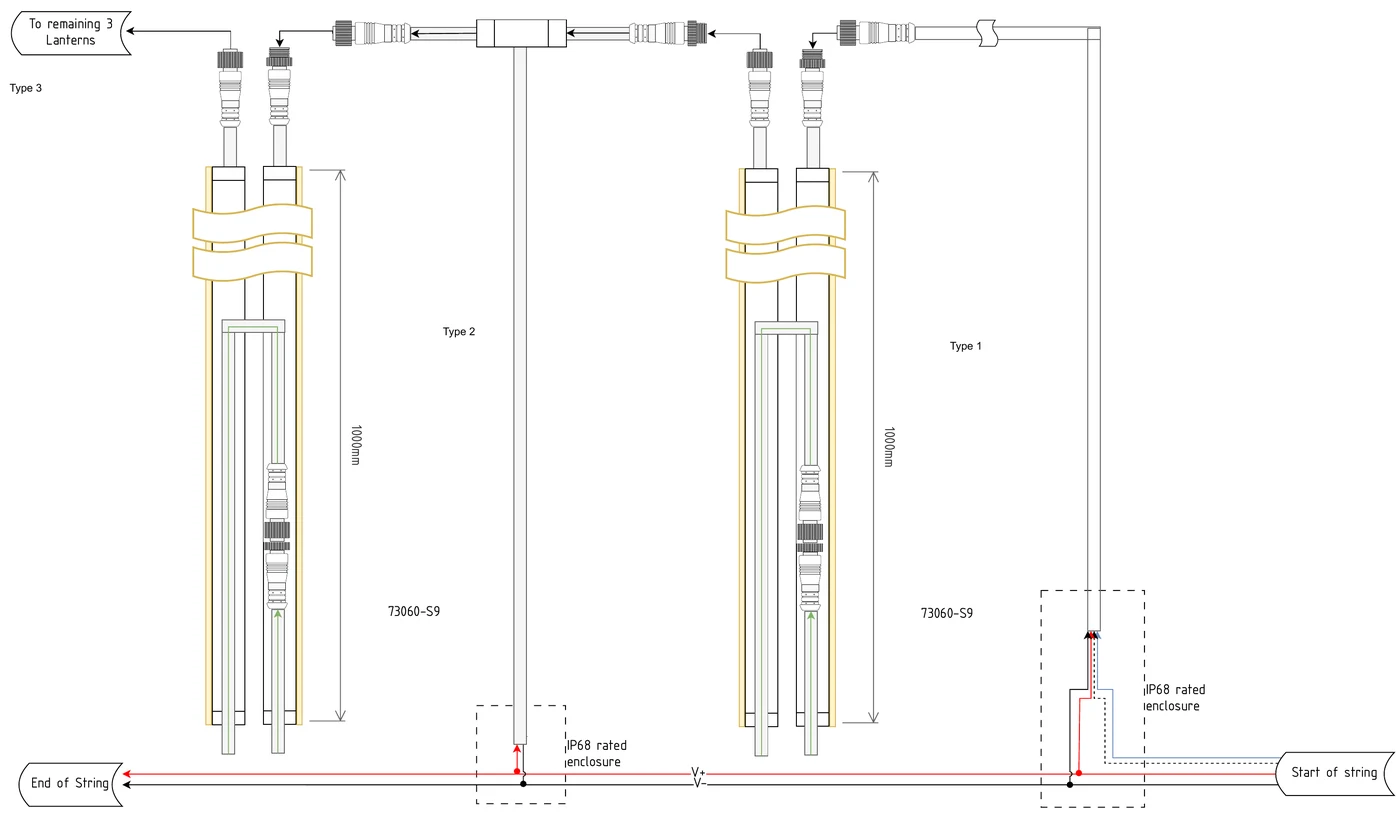
Each strip hangs the length of its tube. Everything that has to survive a Melbourne winter outdoors is sealed: the Neon Flex in its silicone, and the points where power and data are wired into the string inside boxes rated IP68, which means dust-tight and waterproof (diagram 2).
Power along the wire
The further LEDs are from their power supply, the more voltage they lose, so the far end of a long run looks dimmer and its colour shifts. This Neon Flex is rated for 7 metres fed from one end, and each cluster of five lanterns carries 10 metres of it.
So power is topped up along the way. A power injector sits between each pair of lanterns on the wire and feeds the next one fresh, which keeps the last lantern as bright as the first (diagram 3).
Every cable between them is cut to a measured length, worked out from the 1.5 metre spacing, the drop to each lantern and the injector’s own lead (diagram 4).

One gateway for all forty
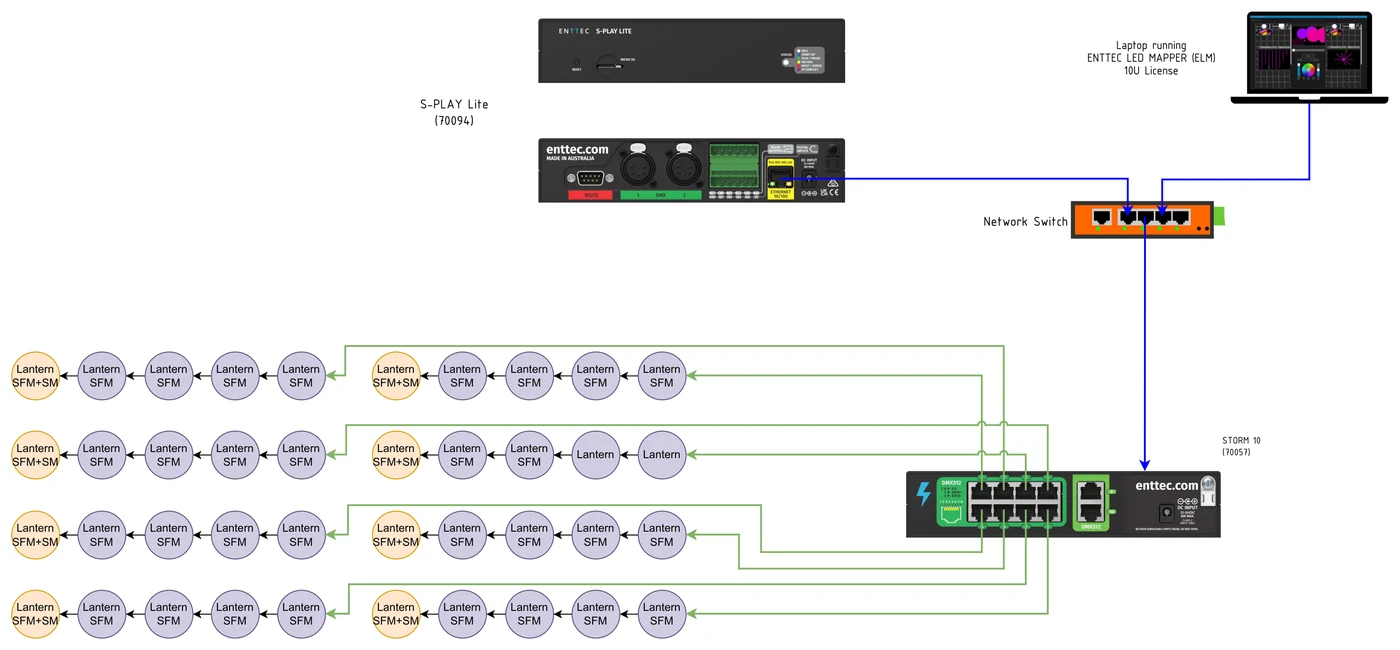
The show reaches the lanterns as Art-Net. Art-Net is DMX, the standard language of lighting control, carried over an ordinary computer network. That is why the laptop running ELM and the S-PLAY Lite can reach the lights with ordinary network gear.
The forty lanterns are wired as eight clusters of five, and all eight connect to a single STORM 10 (diagram 5). The STORM 10 works as a translator: it takes the show in from the network and sends it out as DMX, down a separate cable to each cluster. Each of those cables carries one universe, the name for one line of DMX control. The STORM 10 has ten, so the eight clusters fit on one unit with two to spare.
DMX was chosen over SPI because the show did not need a high pixel density, and DMX runs long distances with no protocol conversion along the way.
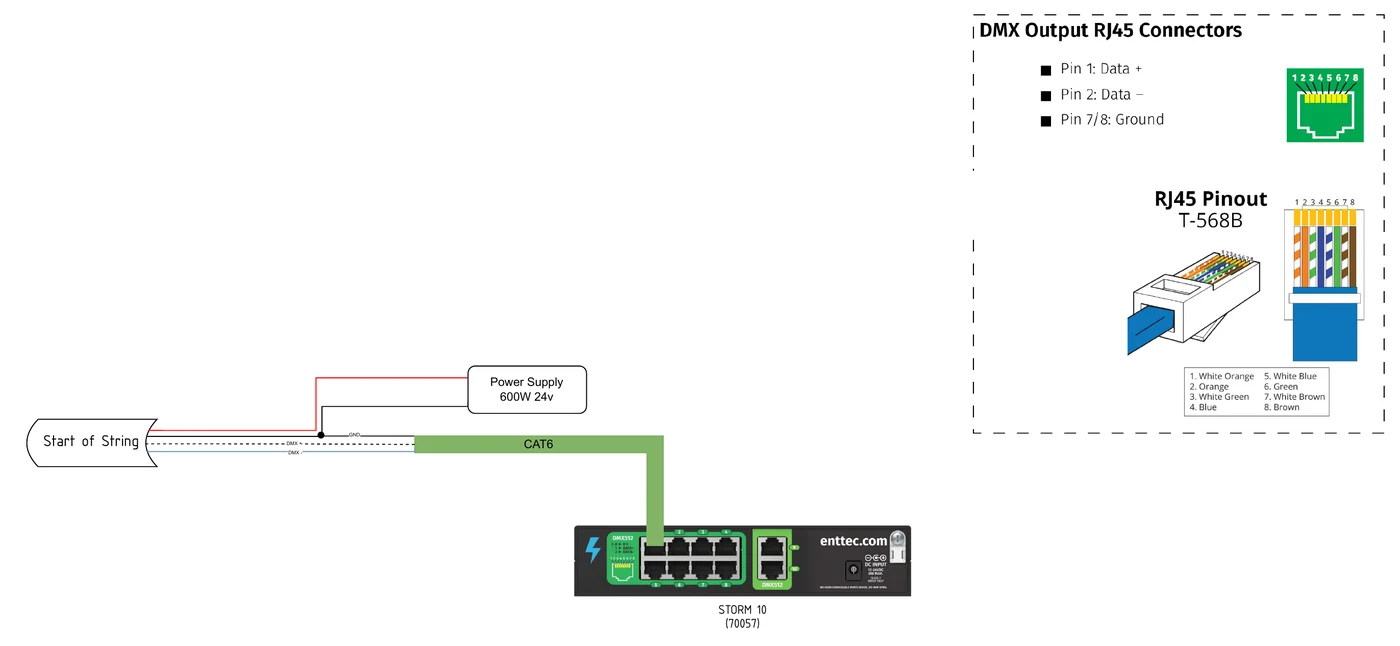
Each cluster then starts where two cables meet: 24 V power from its supply, and DMX from the STORM 10, carried on weatherproof Cat6 cable (diagram 6).
How the show was made
Betty designed the light show for all 5,600 LEDs herself in ELM (ENTTEC LED Mapper), our pixel mapping software, which lays every LED out on screen in the shape of the artwork so she could design across all forty lanterns at once.
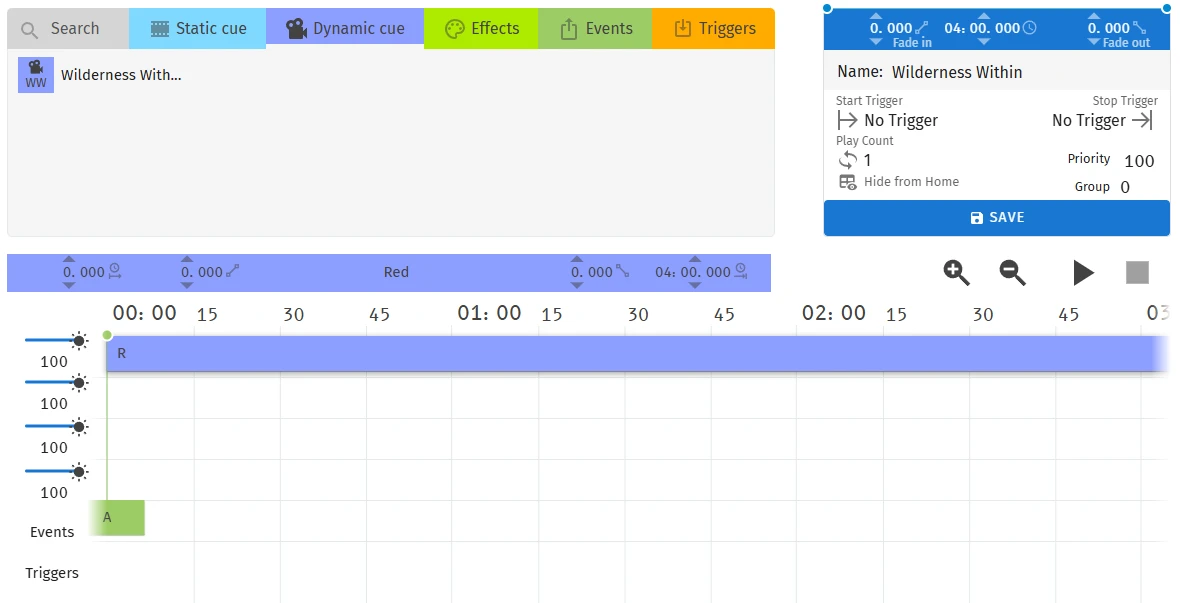
Then she played it live against her own soundtrack, while an S-PLAY Lite on the same network switch as her laptop and the STORM 10 recorded the performance as it happened. What plays every evening is that recording, exactly as she performed it, looping seamlessly.
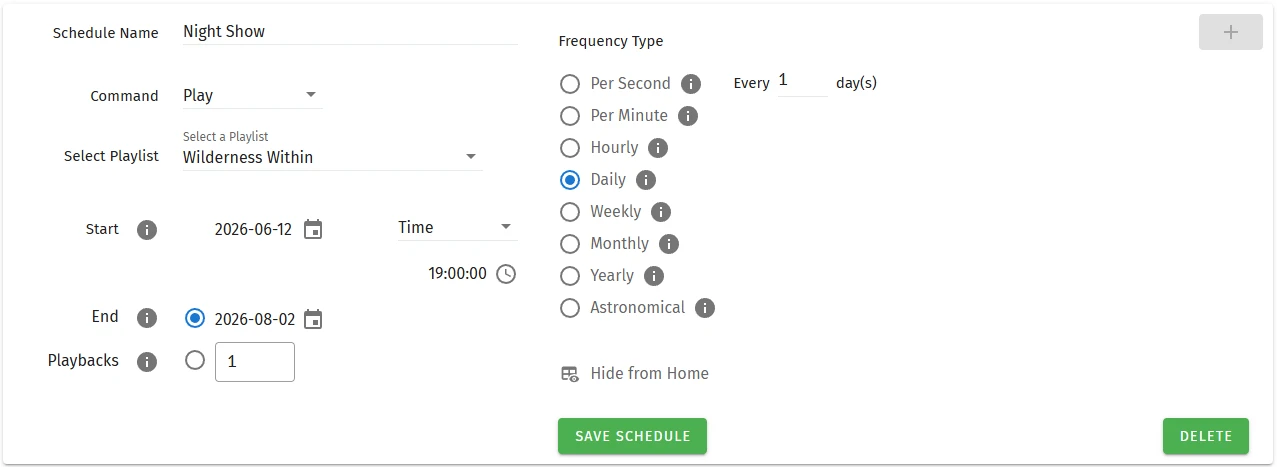
The S-PLAY Lite can play back up to 16 universes, twice the eight this show uses. Inside it, the recording is a single dynamic cue in a playlist, set to run for four hours, with an Event at the start that plays her soundtrack on a separate audio player. Betty set the built-in scheduler to start that playlist at 7pm every day from 12 June to 2 August, the whole Lightscape season, so the show ran until 11pm each night with nobody touching it.

Even though I’ve used this kind of ENTTEC hardware setup many times before, and it’s never failed me, it was the first time I used ENTTEC’s ELM LED Mapper software. It is fantastic, a brilliant way to take what’s essentially a huge number of individual pixels and pull them together in a manageable, easy-to-use system.
I have previously used TouchDesigner, but one of the best outcomes of this project is discovering ELM, and I expect I’ll use it for all my DMX and LED projects from here on.
Result
WILDERNESS WITHIN was part of Lightscape’s whole 2026 season, 12 June to 2 August, one of fifteen installations along the Royal Botanic Gardens trail.
Betty calls it the culmination of a decade of microscope work, and she does not see it as finished: she has always imagined a 100-lantern version, and is already talking to organisations about touring it locally, nationally and internationally.
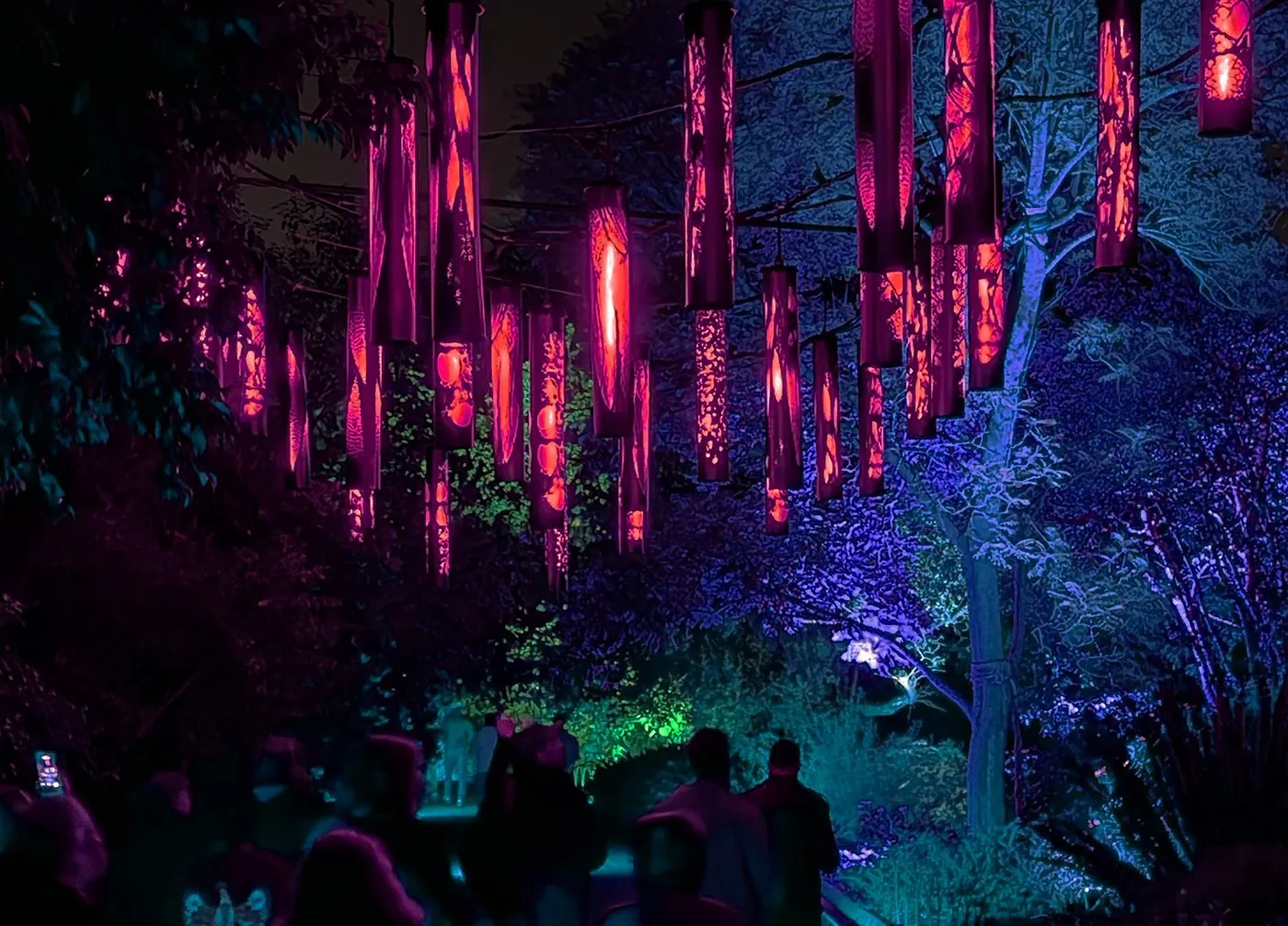
![The lantern field lit red and magenta above a crowd walking the path]()
One of the sequence’s warm states, with the trail busy on a winter evening. ![Close view of lanterns lit red, the printed acrylic showing its enlarged microscope imagery]()
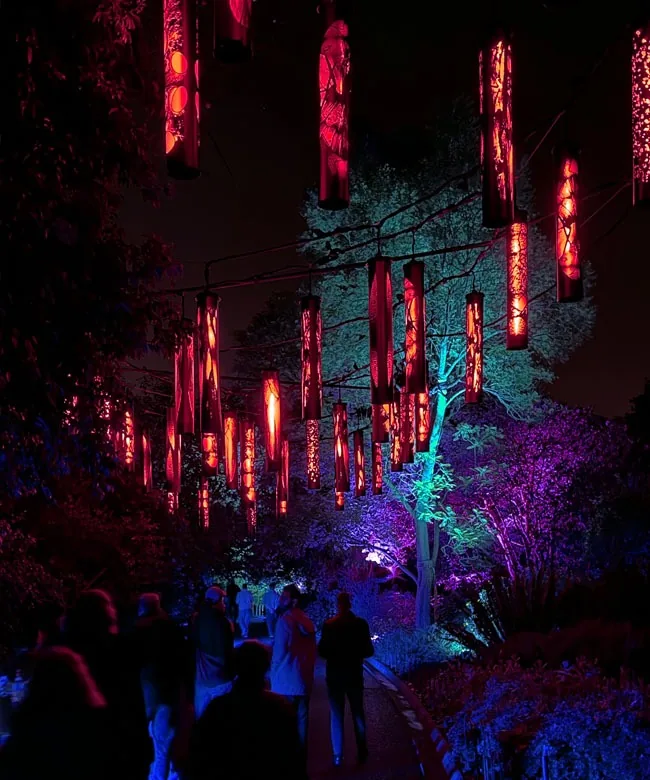
Close in on a red state, near enough to see the print. ![The same lanterns lit cyan, sitting back into the dark tree canopy]()
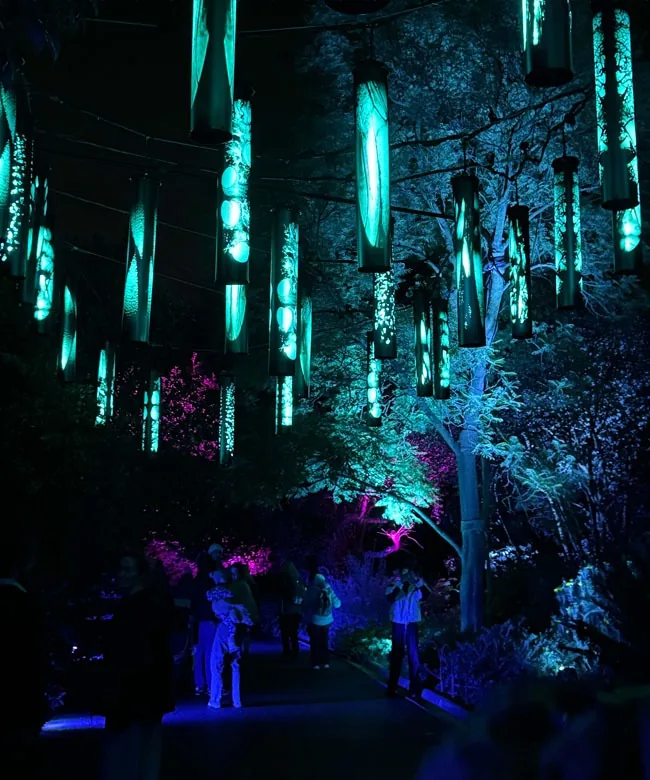
A cyan state, one of the sequence’s cool colours. ![Wide view down the trail at night, a visitor silhouetted beneath the lanterns]()
Looking down the length of the field, which runs roughly 15 metres deep. ![Lanterns lit green above the garden path, the printed imagery showing through]()
The green state, the last of the six the sequence runs through. ![Lanterns lit cold white down a dark stretch of the trail]()
The cold white state, seen from further along the path.
相关产品
了解所用产品
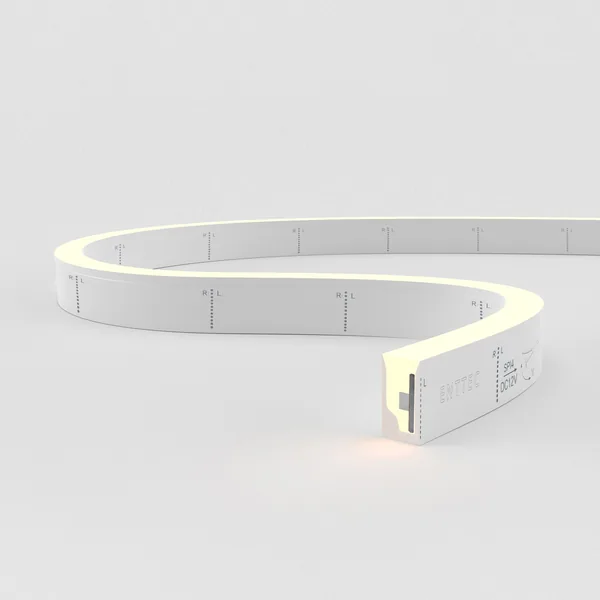
RGBW S9 Neon Flex
货号: 73060
Sealed silicone tube with a wide beam, so no individual dots show through. 80 one-metre lengths at 70 LEDs/m give the artwork 5,600 LEDs.
查看产品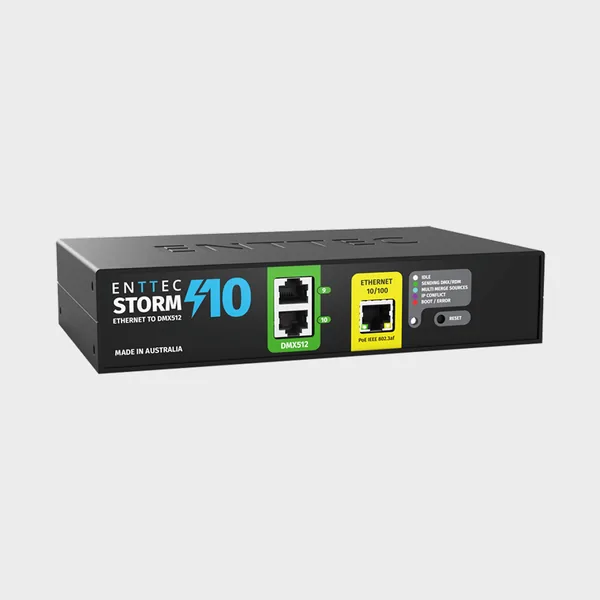
STORM 10
货号: 70057
10-universe Art-Net to DMX gateway. One unit feeds all eight clusters of five lanterns from eight of its ten outputs, forty lanterns from one gateway.
查看产品
ELM (ENTTEC LED Mapper)
货号: 70581
Pixel-mapping software. Betty designed the whole light show in it herself, her first project in ELM.
查看产品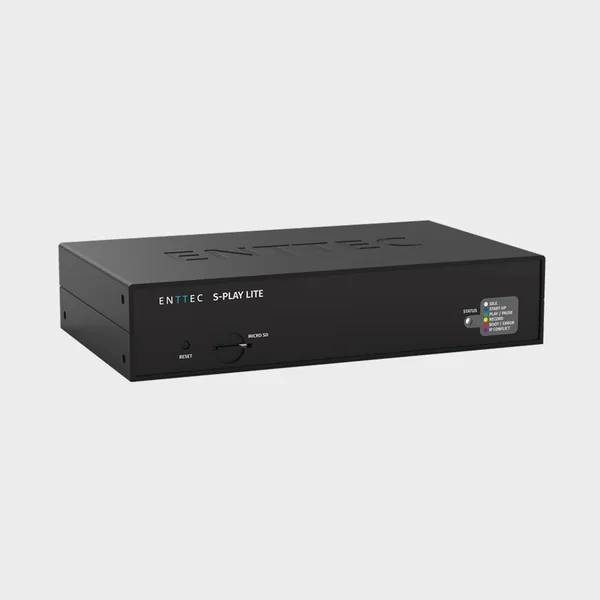
S-PLAY Lite
货号: 70094
Holds the recorded show and runs it to a schedule, so the two-minute loop plays on every open evening of the season with no computer left on site.
查看产品
